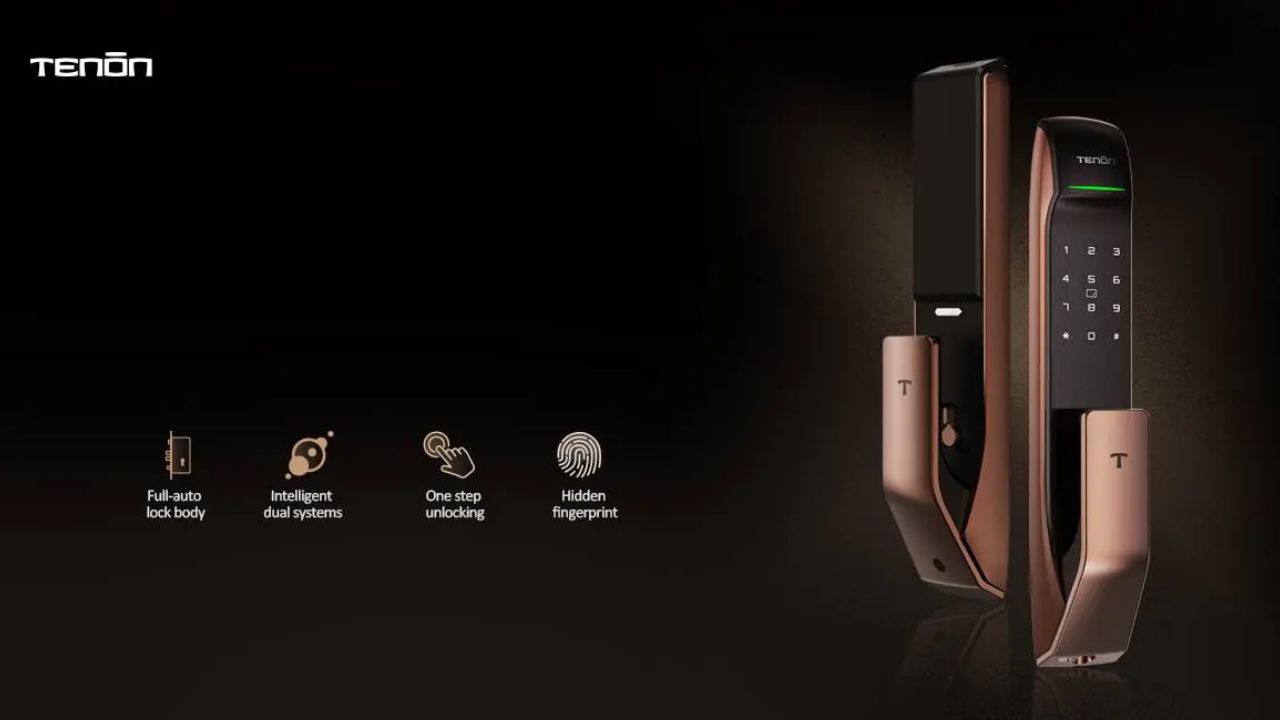
The use of smart locks has transformed the world of home security by introducing technology and convenience in a residential setup. Smart locks allow homeowners to manage who can access their premises, contrary to conventional locks, which rely on digital means like keypads, smartphone applications, or biometric identification. The devices not only give a high level of security but also offer a high level of flexibility, and thus, the families can easily control the people who are allowed to access their homes and at what time. With the ever-increasing smart home market, the choice of the appropriate residential smart lock has become a key issue for the homeowner who appreciates the safety as well as the convenience.
Assessing Security Features
Security is the most important thing when buying a smart lock for a residence. The locking system, encryption level, and tamper-resistance are factors that must be examined by the homeowners. Some of the features of advanced smart locks have been described as two-factor authentication and guest access codes, as well as real-time activity monitoring. A device that is chosen must be of the industry standard concerning cybersecurity, which is that digital access cannot be easily breached. Also, the lock should be a strong construction, which hopefully should be composed of permanent materials that are not easy to break.
Evaluating Compatibility with Doors
Not every smart lock is compatible with every door. The size, material, and style of the doors used by homeowners is a fact that needs to be considered by the purchaser of a device. There are smart locks that would suit wooden doors, and there are others that are effective with metal or composite ones. Moreover, there are locks which are designed to fit on single doors and those locks which fit on double doors or a sliding door. The compatibility check will also make sure that the selected lock is compatible with the system without the need to implement major changes, which will save time and money on installation.
Considering Ease of Use
Another thing that should be considered when choosing a residential smart lock is the ease of use. The primary considerations to be made by homeowners are to use devices whose user interface is user-friendly and that make it easier to lock and unlock the door. Applications on smartphones, touch screens, and voice recognition can be supplemented to the user experience to offer easy ways of control. Moreover, other smart locks also have such options as automatic locking when the door is closed or unlocking via a remote control during deliveries, and it makes daily life even more convenient. An easy-to-use lock, one that demands a minimal amount of effort to operate, will be used frequently, and one that will be used to maximum benefit in terms of security and efficiency.
Reviewing Integration with Smart Home Systems
Most people in modern homes are after devices that can blend well with the already established smart home ecosystems. Smart locks that can be used at home and integrated with mainstream platforms, including voice assistants and home automation hubs, offer the benefit of additional flexibility and control. Integration enables homeowners to integrate security with lighting, cameras, and alarms that establish a unified smart home platform. Selecting a lock that is compatible with other gadgets will guarantee a pleasant experience and allow the maximum potential of connected technology.
Reading Reviews and Seeking Expert Advice
Homeowners need to research user experiences and reviews of experts before making a purchase. The feedback gained in the real world may disclose the information regarding durability, functionality, and customer support that may not be adequately reflected in product specifications. Homeowners can also consult security experts or retailers they trust to make decisions based on certain needs and home arrangements. Meticulous research is done to make sure that the smart lock selected is in line with the security expectations as well as lifestyle needs.
Conclusion
When selecting the appropriate residential smart lock, it is necessary to weigh security, convenience, compatibility, and reliability. Through careful evaluation of these, homeowners would be able to choose a gadget that can increase home security, besides offering the convenience of contemporary technology. An intelligently selected smart lock not only secures the home, but also makes the home a smarter and more efficient place to live. Finally, the time spent in the research and analysis allows making sure that the chosen smart lock will address the specific needs of the household and will be able to bring satisfaction over the long run.